Korean HIFU Treatment
Non-surgical lifting with focused ultrasound — jawline, jowls and cheeks tightened from the muscle layer up, with results that build for months.
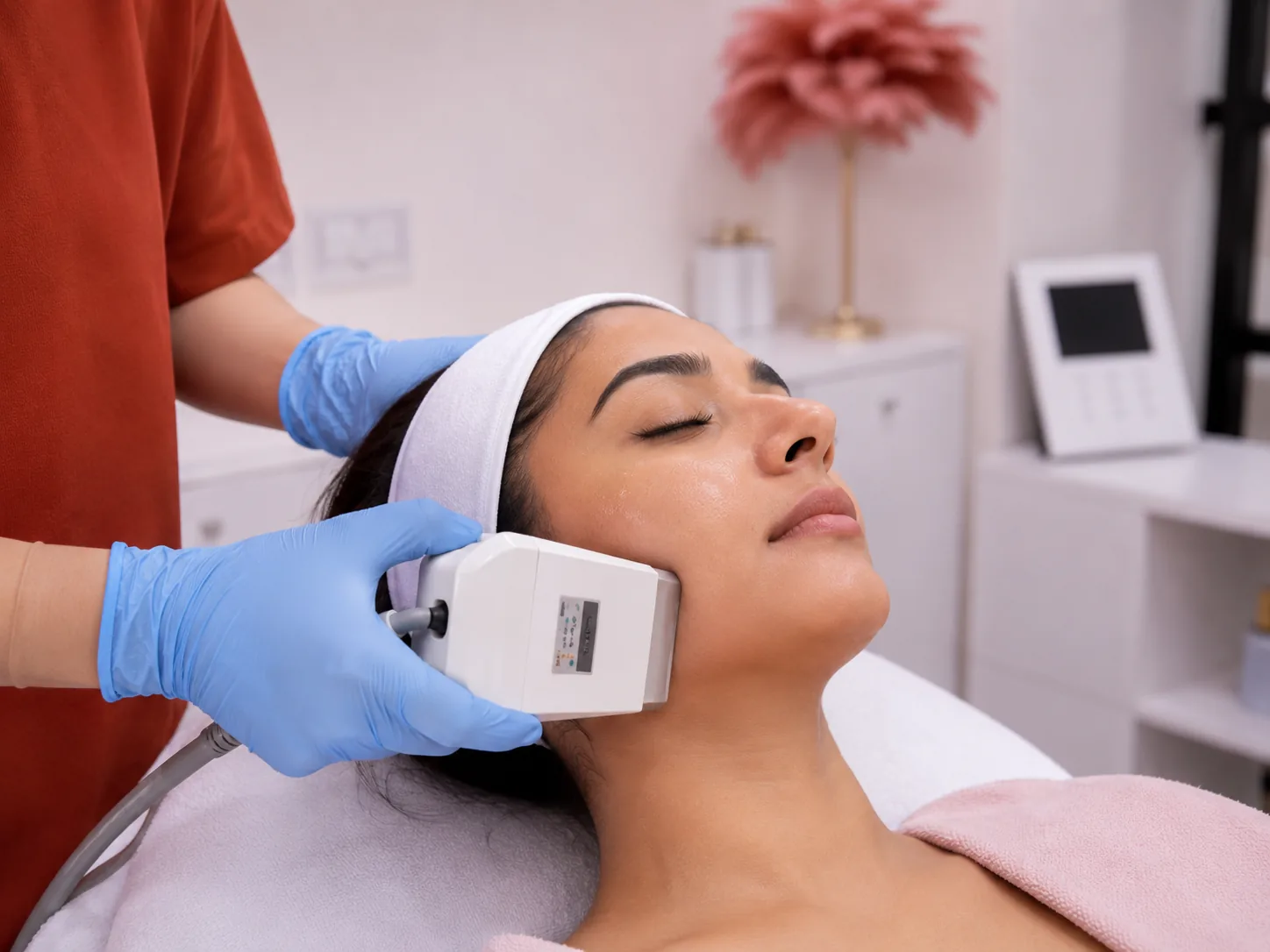
The lift that works on the layer surgeons work on
HIFU focuses ultrasound energy at precise depths — down to the SMAS layer, the same structural plane a surgical facelift tightens — creating thermal points that contract immediately and remodel with fresh collagen over the following weeks. Nothing touches the surface; there is no cut, no needle, no mark.
The protocol is two sessions, 45 days apart. You’ll notice early tightening within days, but the honest timeline for the full result is two to three months as collagen matures — and it then holds for around a year.
- 60–75 minutesTime in studio
- 2 sessions, 45 days apart (₹20,000 for both)Typical course
- NoneDowntime
- Starting at ₹15,000Pricing
- Softening jawline or early jowls
- Sagging you’re not ready to inject or cut for
- Post-weight-loss facial laxity
- You want a once-a-year maintenance treatment
Your consultation, on us
A full doctor’s skin assessment — ₹1,000 free this month. Takes 15 seconds; we’ll confirm on WhatsApp.
Questions we hear at the studio
Does HIFU hurt?
There are moments of deep, hot pinching along the bone — brief and very manageable, but we won’t pretend it’s a facial. Most clients rate it 4–5 out of 10.
What age is it for?
Best results are in the late 30s to 50s window, where laxity is real but skin still produces good collagen. Earlier than that, you likely don’t need it yet.
How does it compare with threads?
Threads give a more immediate mechanical lift; HIFU gives a broader, more natural tightening with zero insertion. Many clients alternate. We offer both — ask at consult.
Book a lifting consultation
We’ll assess your laxity pattern in person — jawline, mid-face and neck each respond differently.