MNRF with PDRN
Microneedling radiofrequency to remodel acne scars and open pores — with PDRN, the Korean salmon-DNA healing serum, driven into every channel.
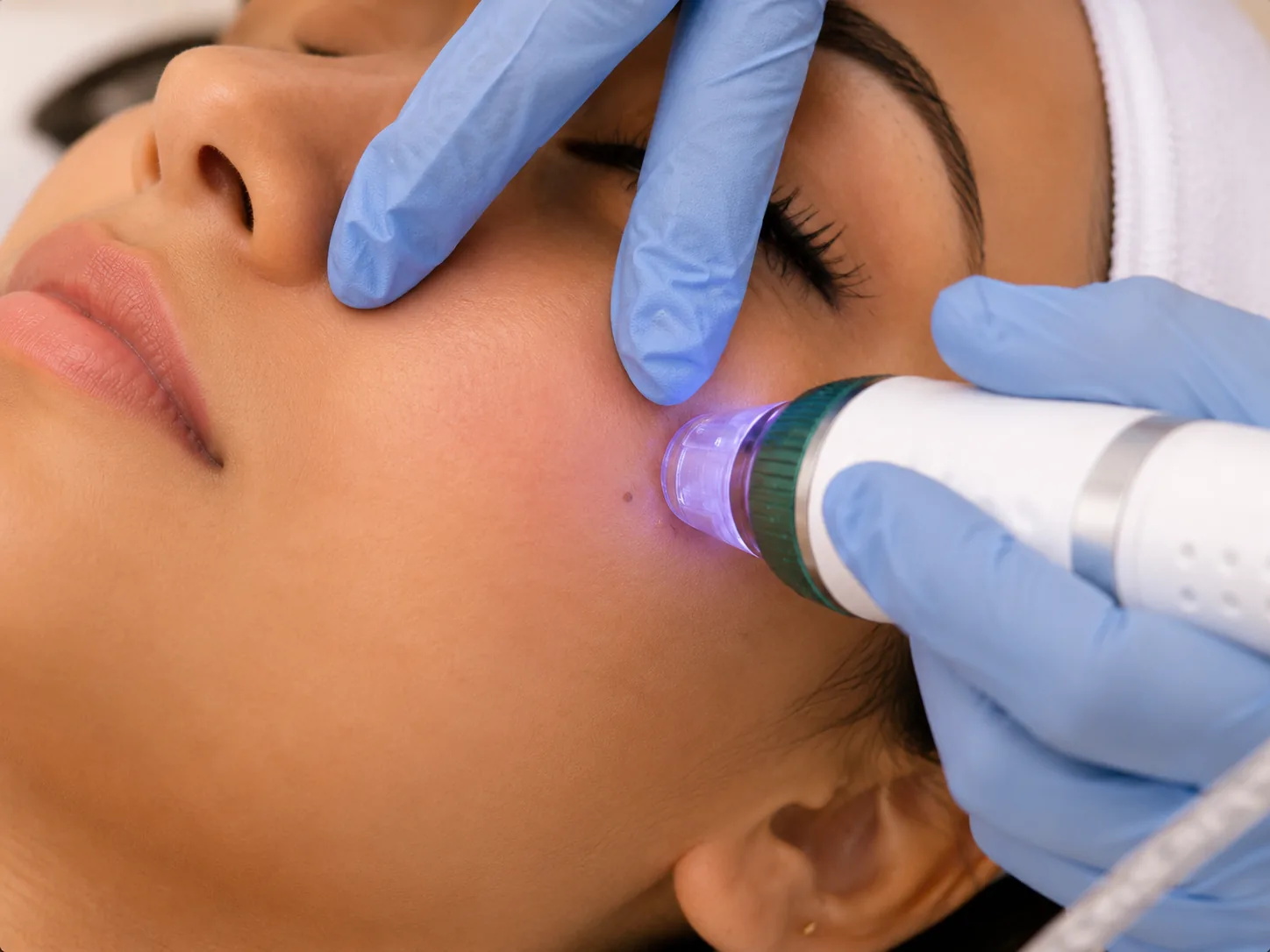
Heat rebuilds the scar; PDRN speeds the rebuild
MNRF delivers radiofrequency heat through insulated micro-needles directly into the dermis — the layer where acne scars actually live — triggering collagen remodelling from inside while the surface stays largely protected. That insulation is what makes it far safer on Indian skin than ablative lasers.
We then apply PDRN — polydeoxyribonucleotide, the regenerative compound Korean dermatology is built on — into the open micro-channels. It accelerates healing, reduces post-treatment downtime and measurably improves the collagen response. Scars soften over a course; pores tighten as a side benefit.
- 75–90 minutes (incl. numbing)Time in studio
- 3–4 sessions, monthlyTypical course
- 1–2 days of rednessDowntime
- Starting at ₹15,000Pricing
- Rolling or boxcar acne scars
- Open pores that facials don’t touch
- Mild skin laxity
- You want scar treatment safe for darker skin
Your consultation, on us
A full doctor’s skin assessment — ₹1,000 free this month. Takes 15 seconds; we’ll confirm on WhatsApp.
Questions we hear at the studio
Is MNRF safe for Indian skin?
It’s the scar technology we prefer for Fitzpatrick III–V precisely because the energy bypasses the pigmented surface layer. Fractional CO2 lasers carry far higher PIH risk on our skin tones.
How much improvement is realistic?
Meaningful softening — most clients see a visible change by session two and a substantial one after the course. Deep ice-pick scars may need adjunct treatments, which we’ll flag upfront.
MNRF with PDRN or with exosomes?
PDRN is the proven Korean standard; exosomes are the newer, more intensive regenerative layer. Budget and scar severity decide — see the exosomes page or ask at consult.
Book a scar assessment
If you can, mention your scar type or attach a description — depth determines the protocol.