Key Takeaways
- Two weeks before a wedding is not too late — but it requires the right protocol, honest expectations, and a practitioner who will not put your skin at risk for the sake of a dramatic result.
- Surface pigmentation, congestion-driven dullness, and uneven tone can visibly improve in 7 to 14 days with the right clinical treatment. Structural pigmentation and deep scarring cannot — and any practitioner who tells you otherwise is not being honest.
- The Korean Pigmentation Correction Therapy — introduced at Glam after Dr Akansha’s visit to CosmoBeauty Seoul 2026 — is specifically designed to produce visible brightening in Indian skin without the downtime that would compromise an event timeline.
- The 14-day protocol: Hydrafacial on Day 1 to reset the skin, Korean Pigmentation Correction Therapy on Day 5 to 7, rigorous SPF from Day 1 through the event, simplified home routine with no new actives.
- The worst thing you can do in the two weeks before a major event is experiment — new products, new actives, new treatments you have never had before. The two weeks before an event is not the time for discovery.
- If you have a wedding, reunion, photoshoot, or major event in two to three months, start now. Two weeks produces an improvement. Three months produces a transformation.
She messaged at 11pm on a Sunday. The message was brief — the kind that people send when they are embarrassed about the urgency but cannot help themselves: “I’m a bridesmaid at Neha’s wedding in two weeks and my skin looks terrible. My face is all patchy and dull. Is there anything you can actually do in this much time?”
Riya was twenty-nine. The wedding was her best friend’s, which meant it was not just a social event — it was one of the most photographed days of someone she loved, and she would be in every photograph. She had been managing her skin with a reasonable home routine for months but had not seen a dermatologist since her early twenties. The patchiness she described was post-inflammatory hyperpigmentation from a bout of maskne two years earlier that had never fully resolved, layered over the surface dullness of someone whose skin had been accumulating Mumbai’s daily pollution load without professional clearing.
Her skin was not a disaster. It was the skin of someone who had been doing the right things but had reached the ceiling of what the right things could produce without clinical support. Two weeks was a compressed timeline. But it was not nothing. And the honest answer to her question was: yes, there is something we can do. Here is exactly what we did — and why.
First: The Honest Conversation About Two Weeks
Before I describe the protocol, I want to be direct about what is and is not possible in a 14-day window — because the internet is full of “dramatic two-week skin transformation” content that sets expectations no responsible practitioner can meet, and the disappointment that follows serves no one.
What is realistic in two weeks for Indian skin with surface pigmentation and dullness:
- Significant reduction in surface congestion and the flat, grey-toned dullness that accumulated dead cells and pollution produce — this responds immediately to a well-executed Hydrafacial
- Visible brightening of surface-level pigmentation — the slight discolouration that sits in the uppermost layers of the epidermis — through targeted Korean pigmentation treatment
- Improved skin texture and a more even surface, making makeup application smoother and more even-toned
- A general luminosity improvement that reads clearly in photographs
What is not realistic in two weeks:
- Significant correction of deep post-inflammatory hyperpigmentation that has been present for two or more years — this requires 8 to 12 weeks of progressive treatment
- Structural skin improvement — collagen production, textural scarring correction — which requires months of clinical programme
- Complete evening of tone in significantly pigmented skin — this is a multi-session journey, not a fortnight
I told Riya this on our first call. Her response was the right one: “I just want to look like the best version of my actual skin. I’m not expecting a miracle.” With that expectation set correctly, we had a productive two weeks.
The 14-Day Protocol: What We Did and Why
Day 1 — Hydrafacial: The Reset
Riya came in on a Monday morning — fourteen days exactly before the wedding. The first priority was not pigmentation. It was the accumulated surface layer: two years of daily SPF, foundation, Mumbai’s PM2.5, oxidised sebum, and dead cells that had built up on her skin’s surface and were responsible for most of the flat, patchy appearance she had messaged about.
The Hydrafacial’s three-step protocol — deep cleansing, controlled exfoliation, and intensive hydration — addressed this layer comprehensively in a single session. By the time she left the clinic, ninety minutes after arriving, the surface dullness had lifted noticeably. Her skin looked cleaner, more hydrated, and more even-toned than when she came in — not because the pigmentation had been treated, but because the layer obscuring the skin underneath had been removed.
This is the most underappreciated dimension of the Hydrafacial: it does not just treat skin, it reveals it. The skin Riya was looking at every morning was not her skin’s actual condition. It was her skin under two years of accumulated surface load. The Hydrafacial showed her what was actually there — and what was actually there was significantly better than what she had been seeing in the mirror.
Days 2 to 5 — Home Protocol: Simple, Targeted, Nothing New
The home routine for the two weeks leading up to the wedding was deliberately simplified. I removed all actives except two: niacinamide serum morning and evening (to mildly inhibit melanin transfer and support barrier function) and SPF50 every single morning without exception. No retinol — the timeline was too short for its benefits to materialise and its initial purging phase risked producing exactly the result we were trying to prevent. No new vitamin C — she had not been using one consistently and introducing a new active in this window was unnecessary risk for marginal benefit.
Gentle gel cleanser twice daily. Niacinamide. Ceramide moisturiser. SPF50. That was the routine. Four products. Every day without exception.
Day 6 — Korean Pigmentation Correction Therapy: The Targeted Intervention
With the skin reset and barrier functioning well after five days of simplified care and the Hydrafacial’s restoration, Riya returned for the Korean Pigmentation Correction Therapy — the treatment Dr Akansha sourced directly from CosmoBeauty Seoul 2026 and introduced at Glam specifically for stubborn melasma, pigmentation, and uneven tone in South Asian skin.
This protocol targets what the Hydrafacial alone cannot: the melanin deposits in the mid-epidermal layer that produce the persistent post-inflammatory pigmentation Riya had been carrying since her maskne episode. The Korean formulation combines targeted pigmentation-interrupting actives with anti-inflammatory components that reduce the melanocyte response during the treatment — meaning it produces brightening without triggering the rebound pigmentation that aggressive treatments risk in Fitzpatrick IV skin.
There was mild redness for approximately two hours after the treatment. By the following morning, Riya sent me an unprompted message: her skin felt smooth, looked more even, and — her words — “like the patches are finally softening.” That is the specific response of surface-to-mid-level pigmentation to the Korean Pigmentation Correction Therapy. Not dramatic. Not immediate. A softening — the beginning of the clearing that, had we had three months, would have become a full correction.
Days 7 to 14 — Maintain, Protect, Let the Skin Settle
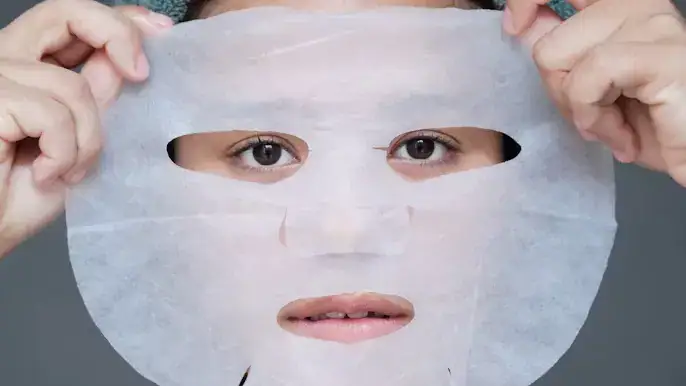
The final week before the wedding required discipline rather than intervention. No new treatments. No new products. SPF50 every morning — non-negotiable, because any post-treatment skin is more photosensitive than baseline, and Mumbai’s UV would undo in an afternoon what the Korean Pigmentation Correction Therapy had begun to produce. The simplified routine continued. On the morning of the wedding, a light facial massage at home to stimulate circulation, a hydrating sheet mask the night before, and the skin arrived at the ceremony doing the best it could possibly do in the time it had been given.
Riya sent me a photograph from the wedding reception. Her skin in the photograph was bright, even-toned, and — most importantly — genuinely hers. Not masked, not filtered, not covered. The patchiness that had prompted a distressed 11pm message two weeks earlier was not invisible, but it was significantly reduced. Her skin looked like the best version of what it actually was. Which was, she said in the message, exactly what she had asked for.
Introducing the Korean Pigmentation Correction Therapy at Glam
The treatment at the centre of Riya’s two-week protocol deserves a fuller introduction, because it is one of the most clinically significant additions to Glam’s treatment menu in 2026.
In late May, I attended CosmoBeauty Seoul 2026 — Korea’s premier professional beauty and aesthetics trade show, held at COEX in Samseong-dong. Among everything I encountered, the Korean Pigmentation Correction Therapy was the protocol I found most directly relevant to the single most common concern I see in Mumbai: stubborn pigmentation on South Asian skin that has not responded adequately to standard treatments.
The protocol is specifically designed for what Korean aesthetic medicine calls the “pigmentation correction” challenge in melanin-rich skin — the combination of surface pigmentation (responsive to standard treatment), mid-level pigmentation (partially responsive), and deep melanin deposits (resistant to most approaches) that together produce the uneven, patchy complexion that affects the majority of Indian skin over time. The Korean formulation addresses all three layers through a sequenced application protocol, using ingredients that have been specifically studied in East Asian and South Asian skin tones rather than extrapolated from studies on lighter Fitzpatrick types.
The anti-inflammatory components embedded in the treatment formulation are particularly important for Indian skin. The single greatest risk of pigmentation treatment in darker skin is that the treatment itself — through the inflammatory response it creates — triggers further pigmentation production. Korean aesthetic medicine’s approach of building anti-inflammation into the treatment itself, rather than managing it afterwards, reduces this risk structurally rather than reactively. For Indian skin in Mumbai, where post-inflammatory hyperpigmentation is the most common complication of poorly calibrated pigmentation treatment, this structural approach makes a meaningful clinical difference.
If You Have More Than Two Weeks — What a Proper Pigmentation Programme Looks Like
Two weeks is the compressed version of what we can do. For anyone reading this with a wedding, reunion, or major event in two to four months — and with pigmentation concerns — this section is for you. A proper pigmentation correction programme at Glam, with sufficient time, looks significantly different from a two-week rescue:
Months 1 and 2 — Assessment, Reset, and Active Correction
- Full skin consultation and Fitzpatrick assessment
- Hydrafacial as the baseline reset in the first session
- Korean Pigmentation Correction Therapy — first and second sessions, four weeks apart, building progressive correction of mid-level and surface pigmentation
- PDRN booster — reducing the chronic inflammation that drives ongoing melanocyte activity in Mumbai’s pollution-heavy environment
- Pico laser for stubborn pigmentation deposits that do not respond fully to the peel protocol
- Daily SPF50 as the non-negotiable foundation throughout
Month 3 — Consolidation and Finishing
- Third Korean Pigmentation Correction Therapy session — building on the first two rounds
- VVS Glass Skin Treatment in the final two weeks — maximising luminosity without any downtime
- No new active treatments in the final seven days before the event
The result of this three-month programme is a qualitatively different outcome from the two-week rescue — not because the two weeks did not produce something meaningful, but because three months allows the cellular processes of pigmentation correction to complete multiple cycles, producing a depth of correction that two weeks simply cannot generate. If you have an October wedding, start in July. If you have a December event, start in September. The gap between starting now and starting in a month is a gap that shows in the photographs.
What People Ask Before Booking a Pre-Event Treatment
Will the treatment leave my skin red or peeling before the event?
The two treatments in the 14-day protocol — Hydrafacial and Korean Pigmentation Correction Therapy — are both specifically selected for their minimal downtime profiles. The Hydrafacial produces zero visible recovery. The Korean Pigmentation Correction Therapy may produce mild redness for two to four hours post-treatment and occasionally mild surface flaking over the following two to three days, which is easily managed with a light moisturiser and is not visible to others. Neither treatment is appropriate if performed fewer than five days before the event — the final five days should be product-only.
My friend had a chemical peel before a wedding and her skin peeled badly. Will this happen?
Standard chemical peels — particularly medium-depth TCA or glycolic peels at higher concentrations — carry a meaningful recovery period that makes them unsuitable in a two-week pre-event window. The Korean Pigmentation Correction Therapy is not a standard chemical peel. Its formulation and delivery are designed to produce brightening and pigmentation correction without the inflammatory response that causes significant peeling. This is one of the key differences between the Korean approach and conventional peel protocols — and one of the primary reasons it is appropriate in a compressed timeline when other treatments are not.
Should I tell my makeup artist that I have had treatment?
Yes — always inform your makeup artist of any skin treatments in the two weeks before the event. The Korean Pigmentation Correction Therapy does not produce post-treatment sensitivity that would conflict with standard bridal makeup application, but your makeup artist should know your skin’s recent history. They will also be better positioned to work with your skin’s improved condition — less coverage needed, better adherence of products — if they know what has been done and can adjust their approach accordingly.
I have active pimples right now. Can I still get treated before the event?
Yes — but the protocol changes. Active acne takes priority over pigmentation in the treatment sequencing: a Hydrafacial (which decongests active breakouts) followed by appropriate acne-targeted treatment, with pigmentation correction deferred to after any active inflammation has settled. Treating active inflammation with a pigmentation protocol risks triggering further PIH — the opposite of the intended outcome. I will always assess the skin’s current condition before recommending the specific treatment sequence for any two-week timeline.
You Have More Time Than Riya Had. Use It.
Riya’s two weeks produced a meaningful improvement in a compressed timeline. If you are reading this and your event — a wedding, a reunion, a major occasion, a photoshoot — is more than two weeks away, you have an advantage she did not. More time means more treatment cycles, more cellular renewal, more complete correction. The pigmentation that needed two weeks to begin softening needs eight weeks to genuinely clear.
At Glam Korean Skin Studio in Andheri West, the Korean Pigmentation Correction Therapy is now available as part of both urgent pre-event protocols and longer-term corrective programmes. Dr Akansha designs every programme based on your timeline, your skin’s current condition, and your Fitzpatrick type — starting with an honest conversation about what the time you have will realistically produce.
Book a Consultation at Glam Korean Skin Studio, Andheri West →
Aston Building, 802, Lokhandwala Rd, above Mercedes showroom, Sundervan Complex, Shastri Nagar, Andheri West, Mumbai 400053
+91 93269 69657 ·
Get Directions
Ready to begin your Korean skin journey?
Book a consultation with Dr Akansha and the team at Glam.
Enquire on WhatsApp