Key Takeaways
- Wonyoungism — the glass skin aesthetic named after IVE’s Jang Wonyoung — is not a routine. It is a clinical outcome produced by barrier integrity, cellular hydration, even skin tone, and surface luminosity working together.
- What fans see on screen is not the result of skincare products alone. Korean idols have access to regular clinical treatments that maintain the skin’s underlying architecture in a way no home routine can replicate.
- Indian skin — Fitzpatrick III–V — is capable of a glass skin result that is distinctly luminous. The challenge is not our skin tone; it is the untreated barriers (pigmentation, texture, Mumbai’s humidity) that stand between where the skin is and where it can be.
- The VVS Glass Skin Treatment at Glam Korean Skin Studio is specifically formulated for South Asian skin — not a Korean protocol applied generically, but one adapted for Indian skin in Mumbai’s climate.
- Glass skin is not a one-session destination. It is a maintained state — achieved progressively and preserved with monthly clinical care and a disciplined home routine.
- Wonyoungism’s core principle — hydration first, everything else second — is the same principle Dr Akansha applies clinically. Before any correction, the skin’s hydration architecture must be restored.
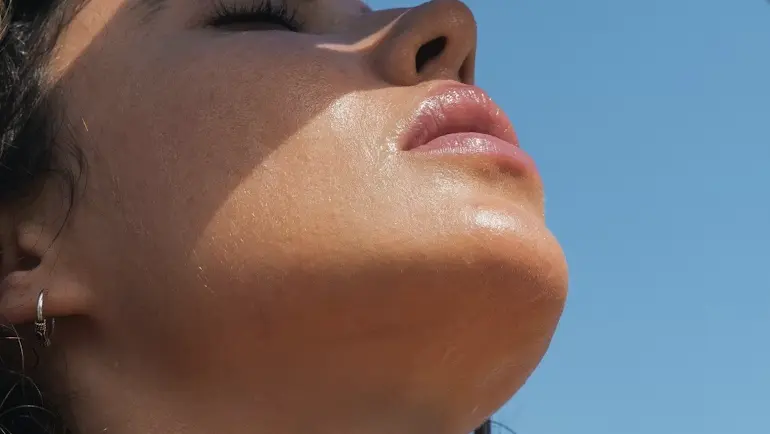
If you follow K-pop at all, you have noticed it. That particular quality of Jang Wonyoung’s skin — the luminosity that reads as lit-from-within on every camera angle, every airport fancam, every magazine cover. It is not simply clear skin. It is skin that appears to have its own light source. Skin so hydrated it seems to glow rather than reflect.
The internet has a name for it: Wonyoungism. It is one of those aesthetic terms that started in fan communities and spread fast, because it perfectly captures a specific look — glassy, luminous, impossibly hydrated skin that appears lit from the inside. Named after Jang Wonyoung of the K-pop group IVE, the trend swept Korean beauty culture in 2024 and 2025 and shows no sign of slowing down.
What I find interesting — as a dermatologist who trained with Korean skin doctors in Seoul and who works specifically with Korean-method protocols at Glam — is the gap between how this aesthetic is discussed online and what is actually producing it. The conversation is almost entirely about products: which toner, which essence, which serum. What is almost never discussed is the clinical layer underneath — the treatments that Korean idols receive regularly, without which the home routine would be building on a compromised foundation.
This blog is the clinical explanation behind Wonyoungism. Not a product list. A science lesson — and a practical guide to what Mumbai skin can realistically achieve through the same Korean approach.
What Glass Skin Actually Is — The Dermatological Definition
Glass skin is not a skin type. It is a skin condition — a temporary state that the skin can be brought to and maintained in through deliberate care. Understanding what produces it clinically is the first step to understanding how to achieve it.
Four things, working simultaneously, produce the glass skin appearance:
1. Barrier Integrity
The stratum corneum — the skin’s outermost layer — functions as a selective membrane. When it is intact and healthy, it holds water efficiently within the deeper layers of the skin, giving the surface a plump, taut quality. When it is compromised — by harsh actives, over-exfoliation, pollution, or humidity extremes — it loses this water-holding efficiency, and the skin appears dull, uneven, and flat. The first clinical pillar of glass skin is a functioning barrier. Ceramides are lipids that make up a significant portion of the skin’s natural moisture barrier. When the barrier is healthy, it holds water in and keeps irritants out, which directly supports the plump, luminous look of Wonyoungism skin. At Glam, every glass skin programme begins here — before we address tone, texture, or luminosity, we restore the barrier. Treating compromised skin with brightening protocols is like polishing a cracked lens.
2. Cellular Hydration — Deep, Not Surface
There is a fundamental difference between surface hydration (the temporary plumpness you get from applying a hyaluronic acid serum) and cellular hydration — the state in which the skin cells in the deeper dermis are consistently well-supplied with water. Surface hydration is transient; it lasts hours. Cellular hydration is structural; it is what produces the sustained glass skin quality that does not disappear by mid-afternoon.
Products achieve surface hydration. Clinical treatments — skin booster injections, PDRN boosters, and the layered hydration protocols we use at Glam — deliver hydrating agents directly to the dermal layer, where they stimulate the skin’s own production of hyaluronic acid and support cellular water retention over weeks, not hours. Wonyoungism routines work through layering thin, watery products rather than relying on one heavy moisturiser to do all the work. The typical structure is: toner (first hydration layer), essence (second layer, often slightly more concentrated). At the clinical level, we replicate this layering principle — but at a depth that no topical product reaches.
3. Surface Texture Refinement
Glass skin requires a surface smooth enough to reflect light evenly. Textured skin — whether from enlarged pores, accumulated dead cells, old acne scarring, or chronic congestion — scatters light rather than reflecting it, which is what produces the dull, uneven appearance that no amount of highlighter fully corrects. Regular professional exfoliation through Korean-calibrated peels clears the cellular debris that accumulates faster in Mumbai’s pollution and humidity environment than in most other cities. This is the step that products can approach but rarely complete — and it is the step that produces the most immediately visible difference after a single clinical session.
4. Even Skin Tone
Pigmentation, post-inflammatory hyperpigmentation, and uneven skin tone interrupt the glass skin effect because they create variation in the skin’s light-absorption properties. Where pigmentation is present, light is absorbed differently — and the skin’s surface appears patchy rather than uniformly luminous. For Indian skin, where PIH from sun exposure, breakouts, and hormonal fluctuation is more prevalent than in Korean skin, this is the hardest pillar to maintain with products alone. The Korean Trio Peel and pico laser protocols at Glam specifically address this pillar — working at the melanocyte level to produce the even tone that is the foundation of the glass skin look.
What the Fan Routines Miss: The Clinic Behind the Idol
Here is the honest conversation that rarely happens in Wonyoungism content: what you see on Wonyoung’s skin on a stage, at an airport, or in a magazine shoot is not produced by an at-home skincare routine alone. It is produced by a skin that receives regular professional treatment — the kind of maintenance that keeps the underlying architecture of the skin in a state of optimal health, so that the home routine is enhancing a strong foundation rather than compensating for a weak one.
Korean idols, particularly those at the level of IVE’s visibility, have access to dermatology clinics with a frequency and consistency that is simply part of the professional infrastructure of the Korean entertainment industry. Facial treatments before important schedules, skin booster injections for hydration maintenance, glass skin protocols before major shoots — these are routine, not special-occasion. Artists such as Winter from aespa and Wonyoung from IVE have popularised the glass skin appearance, and their makeup artists have affirmed to apply multiple layers rather than a single thick layer — but the makeup is working on skin whose underlying quality has already been established clinically.
This is not criticism of the idol or the product recommendations. It is just the clinical reality: you cannot replicate a clinically maintained skin with products alone, any more than you can replicate the fitness of a professional athlete with a home workout. The tools are different. The depth of intervention is different. And the results are correspondingly different.
What this means practically is that the Wonyoungism home routine — layered hydration, ceramide moisturiser, SPF50, gentle cleansing — is genuinely excellent skincare practice and will produce visible improvement for most skin types. But the glass skin result that makes Wonyoung’s skin a global search term is the result of clinical maintenance, Korean-formulation treatments, and a protocol discipline that extends well beyond any product shelf.
Can Indian Skin Achieve Glass Skin? The Honest Answer
Yes — and I want to be specific about why, because the question gets asked with a resignation that it does not deserve.
Indian skin (Fitzpatrick III–V) has properties that, when correctly treated, produce a glass skin result that is genuinely extraordinary. The higher melanin content that makes Indian skin more prone to post-inflammatory hyperpigmentation is the same property that gives it a depth of luminosity, a warmth, and a richness that lighter skin tones cannot produce. When glass skin is achieved on deep brown skin, it does not look like a filtered photograph. It looks like something living.
The challenges are real but they are specific and addressable:
- Post-inflammatory hyperpigmentation — the dark marks from past breakouts, sun damage, or friction — is more persistent in Indian skin and requires targeted clinical treatment rather than products alone.
- Mumbai’s environmental load — year-round UV, particulate pollution, and five months of extreme humidity — disrupts barrier function more aggressively than most environments and requires a clinical maintenance rhythm that most product-only routines cannot substitute.
- Treatment calibration — the most common reason Indian skin clients do not achieve the glass skin result they are seeking from clinical treatments is that the treatments were not calibrated for their Fitzpatrick type. A peel formulated for Korean skin applied at the same concentration to Fitzpatrick V skin is not the same treatment. The outcomes are different, and sometimes actively harmful. Korean-method protocols adapted for Indian skin — which is what we do at Glam — produce a different result than generic protocols applied without this calibration.
None of these are permanent barriers. They are the conditions that require a specific approach, and when that approach is applied correctly, the result is glass skin that reflects the fullness of Indian skin’s natural potential — not a pale imitation of a Korean aesthetic, but something distinctly its own.
The VVS Glass Skin Protocol at Glam — What Actually Happens
The VVS (Visible Vibrant Skin) Glass Skin Treatment at Glam Korean Skin Studio is the clinic’s single most-booked service, and it is the clinical translation of everything the Wonyoungism aesthetic represents — built specifically for Indian skin in Mumbai’s climate.
Here is what the protocol involves, and why each step matters:
Step 1 — Deep Cleansing and Barrier Assessment
Before any treatment begins, the skin’s current barrier condition is assessed. Mumbai skin, arriving at the clinic after a day of commuting through traffic and humidity, carries a film of pollution particles, oxidised sebum, and particulate matter that must be properly removed before any active treatment. The cleansing step is not cosmetic — it is clinical preparation.
Step 2 — Korean Peel or Exfoliation Protocol
A Korean-formulation exfoliation step removes the accumulated dead cell layer and prepares the skin’s surface for the hydration and brightening steps that follow. The formulation is calibrated for the client’s Fitzpatrick type — lighter exfoliation for Fitzpatrick IV and V skin, more active for III. This is the step that produces the immediate visible texture refinement that most clients feel when they touch their skin immediately after.
Step 3 — Layered Korean Hydration
Following the exfoliation, the skin receives the layered hydration that is the structural heart of the glass skin protocol — Korean essences, concentrated serums, and hydration boosters applied in sequence, each delivering water-binding ingredients to progressively deeper layers of the skin. This step is where the glass skin quality is built: the dewy, lit-from-within quality that comes from cellular hydration rather than surface moisturisation.
Step 4 — Luminosity Finishing
The final step addresses the skin’s reflective quality — maximising the even surface luminosity that is the visual signature of glass skin. Clients consistently describe the feeling at this point as their skin having been “switched on” — a quality of light that feels internal rather than applied.
The Clinical Additions: PDRN and Skin Boosters
For clients whose glass skin goal is more than surface luminosity — whose skin needs cellular repair, deep hydration at the dermal level, or the stimulation of new collagen and hyaluronic acid production — the VVS treatment can be combined with PDRN booster injections or skin booster injections. These add a depth of result that the topical protocol alone cannot achieve, and they are the treatments that produce the sustained glass skin quality between sessions, rather than only immediately after a facial.
The Wonyoungism Routine That Actually Works for Mumbai Skin — At Home
The home side of the glass skin protocol matters as much as the clinical side. Here is what Wonyoungism looks like adapted for Indian skin in Mumbai’s climate — not the generic version, but one that accounts for the specific challenges of our environment:
Morning
- Gentle gel cleanser — pH balanced, no sulfates. In Mumbai’s humidity, you need to clean overnight sebum without stripping.
- Hydrating toner — watery, not astringent. The first layer of hydration. Pat in, do not wipe.
- Essence or hydrating serum — hyaluronic acid, centella asiatica, or fermented ingredients. The second layer.
- Lightweight moisturiser — gel-cream or water-based for Mumbai’s humidity. In monsoon, skip cream entirely and use a hydrating serum as your final step.
- SPF 50 PA++++ without fail — the most important step. Wonyoungism treats sunscreen as sacred. This single habit prevents more ageing than any serum or treatment ever could. For Mumbai skin, which accumulates UV damage year-round, this is even more non-negotiable.
Evening
- Oil cleanser first, then gel cleanser — the double cleanse that removes the day’s sunscreen, pollution, and sebum before your actives can do anything useful.
- Toner and essence — same as morning.
- Targeted serum — niacinamide for PIH and pore refinement, Vitamin C for brightening (alternate nights if using retinol), peptides for barrier support.
- Ceramide moisturiser — heavier than morning, to support overnight barrier repair.
“Korean dermatology’s emphasis on barrier-first care before active correction is not a trend. It is a clinical principle with strong evidence: a healthy barrier absorbs and utilises active ingredients more effectively, making the entire routine more efficient and the results more durable.”
This routine, paired with a monthly glass skin treatment at Glam, is the closest real-world approximation of what Korean idols do to maintain their skin between the high-visibility schedules that put them under cameras and judgment at a level most of us will never experience. It is not magic. It is consistency, the right protocol, and the right clinical foundation.
Quick Answers — Wonyoungism and Glass Skin for Mumbai Skin
My skin is oily and I live in Mumbai. Can I still achieve the glass skin look without looking greasy?
Yes — and this is one of the most common misconceptions about glass skin for oily skin types. The biggest challenge for oily skin types is that a fully dewy finish can tip into looking greasy by midday. A few adjustments help significantly — lighter formulas throughout: watery toners and gel-based moisturisers. Clinically, a Hydrafacial regulates sebum production over time, meaning that with regular sessions, the skin produces less excess oil — and the glass skin look becomes easier to maintain throughout the day. The goal is controlled luminosity, not shine.
Is one glass skin session enough to see results?
One session produces a visible and immediate result — most clients leave the VVS treatment looking noticeably brighter, more even-toned, and more luminous. But one session does not produce the sustained glass skin quality that Wonyoung shows consistently. That requires three to four sessions to establish, and monthly maintenance to preserve. Think of it like fitness: one session at the gym produces a result, but the condition you want requires a practice.
I have dark marks from old acne. Can I still get glass skin?
Yes — but the programme needs to address the PIH before or alongside the glass skin treatments. The Trio Peel at Glam specifically targets this: it is the treatment that resolves the pigmentation that stands between Indian skin and the even tone that glass skin requires. Most clients with moderate PIH see significant improvement within three to four Trio Peel sessions, after which the glass skin protocols can work on a much more even canvas.
How does the VVS Glass Skin Treatment differ from a regular facial?
A regular facial is primarily a relaxation and surface-cleansing treatment. The VVS Glass Skin Treatment is a clinical protocol — a structured sequence of active steps that each serve a specific function in the glass skin outcome, using Korean-formulation products and techniques rather than generic salon products. The difference in the skin’s appearance the following day is the most direct answer to this question. Clients who have had both consistently describe the VVS result as qualitatively different — not just cleaner, but genuinely luminous in a way that a standard facial does not produce.
I am a K-pop fan but I am on a budget. Where do I start?
Start with the home routine: double cleanse, toner, essence or hydrating serum, lightweight moisturiser, SPF50. This alone, done consistently for eight weeks, will improve your skin’s baseline condition more than most people expect. Then book a single Hydrafacial — it is the most accessible entry point to clinical glass skin treatment, immediately visible, and zero downtime. Many of Glam’s long-term clients started with a single Hydrafacial on a friend’s recommendation and returned monthly from that point forward.
Your Skin Has the Potential for This. It Just Needs the Right Protocol.
Wonyoungism is not a Korean thing. It is a skin science thing — and the science applies to every skin type, every skin tone, every city. What changes is the protocol: the specific calibration of treatments for your Fitzpatrick type, your skin’s current condition, and the environmental challenges of where you live.
At Glam Korean Skin Studio in Andheri West, Dr Akansha has designed glass skin protocols specifically for Indian skin in Mumbai’s climate — drawing on her ongoing engagement with Korean dermatologists in Seoul and her daily clinical experience with the Mumbai skin types she sees every session. The VVS Glass Skin Treatment is the most direct path from where your skin is now to where Wonyoungism says skin can be.
Book a Glass Skin Consultation at Glam Korean Skin Studio, Andheri West →
Aston Building, 802, Lokhandwala Rd, above Mercedes showroom, Sundervan Complex, Shastri Nagar, Andheri West, Mumbai 400053
+91 93269 69657 ·
Get Directions
Ready to begin your Korean skin journey?
Book a consultation with Dr Akansha and the team at Glam.
Enquire on WhatsApp